
Environmental crisis in northern Costa Rica comes to a head
Valuable rainforest is disappearing in northern Costa Rica - despite numerous complaints and clear legal requirements. Organized networks are increasingly behind the ongoing deforestation, while state control mechanisms are failing. What is happening in La Guaria is not an isolated case, but an expression of a
nationwide crisis that threatens both the environment and the rule of law.
Text by Beate Klein | Volunteer at Tropica Verde
Alarming report on the situation in Costa Rica
In mid-April 2026, an alarming article was published in the online edition of the Tico Times, a newspaper published daily in English in Costa Rica, which drew attention to a worsening environmental crisis - far beyond a single location. At its core, it is not just about nature conservation, but about the ability of the rule of law to function. The government that will take office in 2026 is facing a fundamental change of course: Far-reaching reforms are required, including more transparency, independent supervisory bodies, better funding for the authorities and consistent prosecution of illegal activities. Without decisive action, the progressive destruction of one of the country's most valuable natural heritages is imminent.
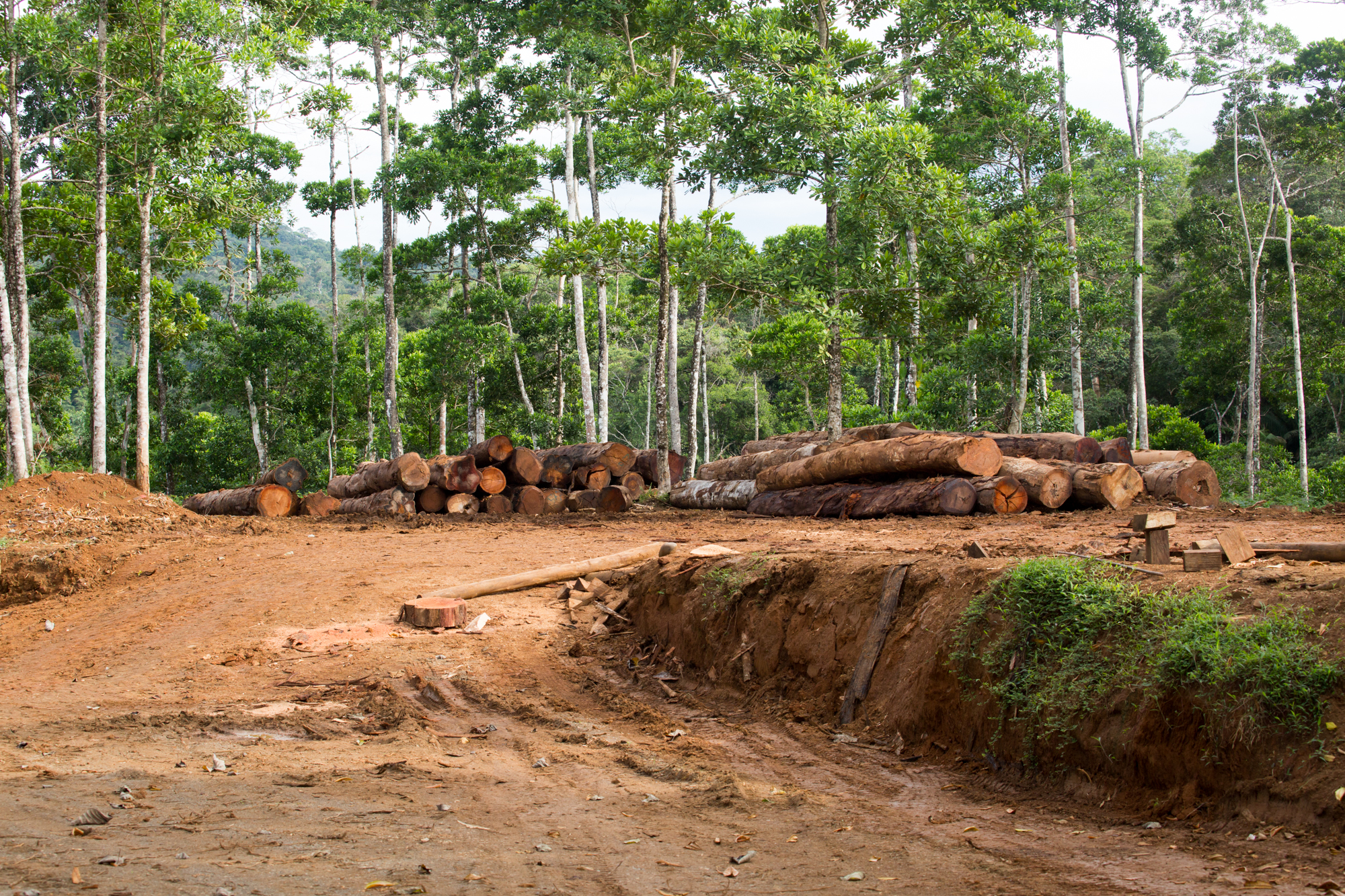
The starting point for the current developments is the municipality of La Guaria in the Sarapiquí region, where primary forest in one of the country's most important biological corridors is increasingly being destroyed. Despite numerous reports from the population and environmental organizations, deforestation is continuing, often at night and apparently largely unchecked by the responsible authorities.
Illegal deforestation as a structural problem
This is by no means an isolated or local problem, but a nationwide phenomenon. Illegal deforestation has assumed considerable proportions in Costa Rica. Thousands of environmental offenses are registered every year, with timber theft being the most common category. Nevertheless, these reports rarely lead to concrete measures or even convictions, a clear indication of structural deficits within the responsible institutions.
More about our work in rainforest protection
Find out more about our projects to protect the rainforest in Costa Rica: ▸ https://tropica-verde.de/projekte/
Monocultures as a driver of deforestation
A key driver of this development is the expansion of large-scale monocultures such as pineapple, banana and palm oil plantations. These forms of agriculture are extremely land-intensive and are increasingly encroaching on previously untouched forest areas. Illegal loggers often prepare the areas by first extracting the valuable wood before the land is used for agriculture.
Organized crime in the rainforest
It is particularly worrying that many of these activities appear to be backed by organized criminal structures. Police operations have shown that the perpetrators are often heavily armed, use modern technologies such as drones and are highly organized. This underlines the fact that these are not isolated violations of the law, but systematic and professionally coordinated interventions in protected natural areas.
Failure of state control systems
At the same time, investigations revealed serious shortcomings in the state control system. The SINAC (Sistema Nacional de Áreas de Conservación), which reports to the Ministry of Environment and Energy, is responsible for monitoring more than 160 protected areas, including 30 national parks. However, a report published in 2025 by the supreme audit authority (Contraloría General de la República de Costa Rica) was devastating: According to the report, a large proportion of the deforestation permits issued by SINAC do not meet the legal requirements. Furthermore, there is a lack of functioning control mechanisms, transparent documentation and reliable traceability of the felled timber. Technical deficits, outdated systems and a lack of digitalization further exacerbated the situation, not least because funds amounting to USD 325,000 earmarked for 2024 had been tacitly diverted for other purposes. There are also indications of corruption and a lack of integrity within the responsible authorities.
Corruption and illegal encroachment on protected areas
The situation is also being viewed increasingly critically in political terms. SINAC's budget has been cut by 40 percent, which has led to considerable bottlenecks in terms of personnel and equipment and is massively restricting effective controls on the ground. In this regulatory vacuum, illegal networks could operate almost unhindered. A particularly sensational case on the Caribbean coast also illustrates the close links between illegal logging and corruption. In one protected area, officials and businessmen were accused of having jointly issued illegal permits and manipulated land classifications in order to reduce the boundaries of the protected area. In this way, the state's natural heritage has been irretrievably destroyed for private gain. Despite repeated warnings from the Attorney General's Office, the necessary measures to restore the original boundaries have not yet been implemented by SINAC.
Impact on the environment and society
For affected communities such as La Guaria, this means in concrete terms that their reports go unheard while the forest disappears irretrievably. This not only leads to the destruction of sensitive ecosystems, but also permanently undermines the population's trust in state institutions.
