
An Encounter with the Endangered Forest
Once upon a time—or, to be more precise, one morning in October 1990 —I heard a very loud tractor noise from my garden that seemed to be coming from very close by. There was no road there, just woods. So I went to investigate and followed a narrow path that led through the woods. As I came over a small hill, I suddenly came upon a freshly rutted tractor track—an open wound in the forest. And then I saw a tractor drive by, dragging a massive tree trunk behind it!
Completely upset, I looked in the direction he had come from and saw the property owner and a few loggers there. I asked him what they were up to. He replied that they were “only” going to cut down and haul away thirty selected trees. That worried me greatly. In the weeks that followed, I went on an exploratory tour of the forest with Clemens, a long-term volunteer on a neighboring property. We traversed a large portion of the threatened forest area—the property encompasses more than sixty hectares of forest—and discovered that most trees above a certain size were marked with a large number painted on them. We found numbers up to 122.
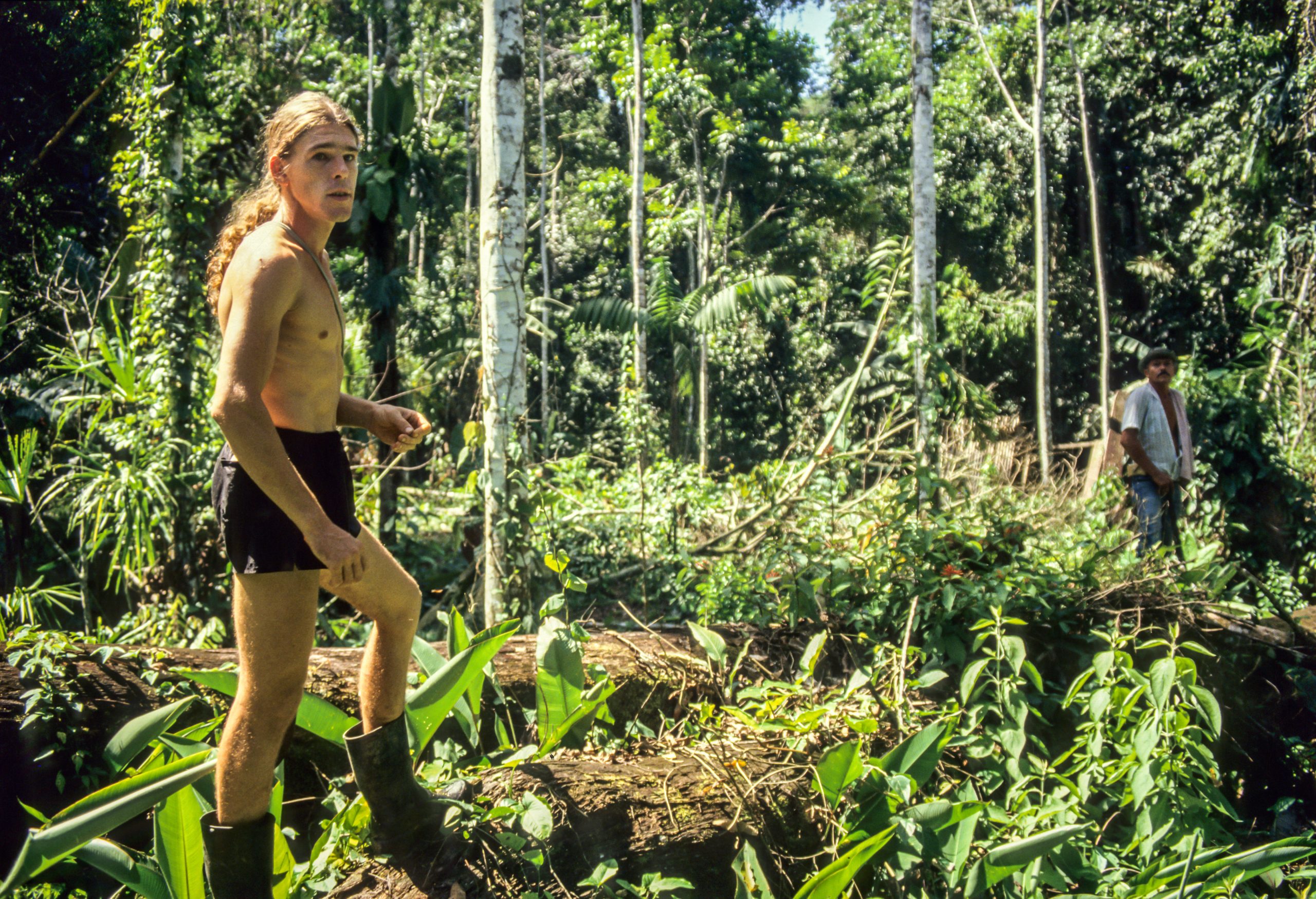
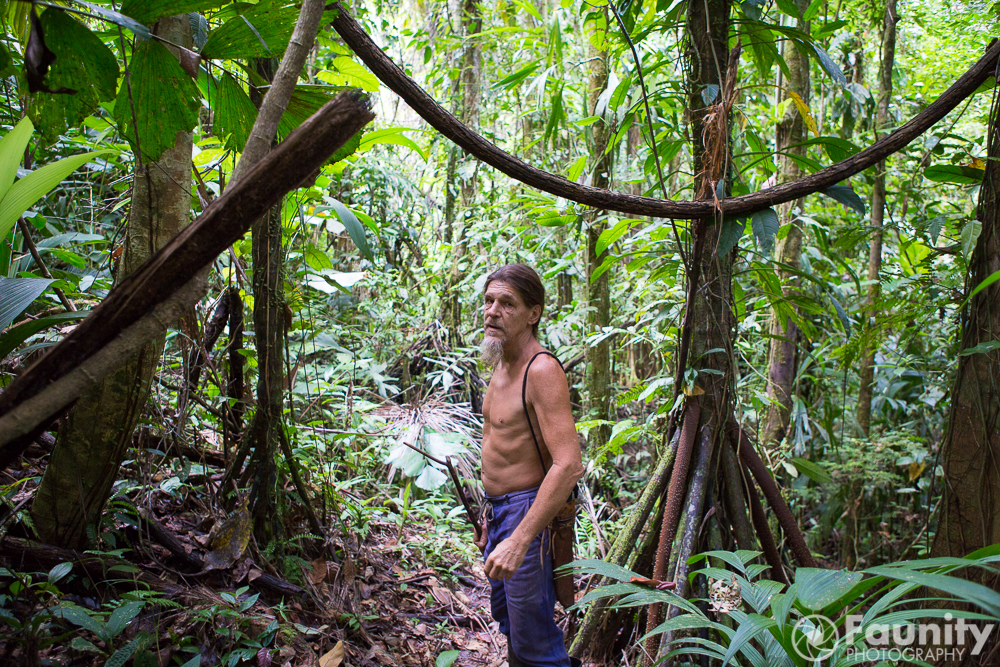
Stirred by our discovery and at the same time overwhelmed by the feeling that had come over us after hours in this primary forest, we finally reached the highest part of the area. It was the most inaccessible spot in the entire region and had never been cleared. And suddenly we saw a group Red Monkey! More than twenty animals—even though one had assumed for years that, that they are from this area had disappeared. Stunned and hungry, we finally set off for home. After a long hike along muddy trails, we didn't arrive home until after dark—because we had come down the wrong side of the mountain.
Even today, in 2026, I can still recall that day as vividly as if it were just yesterday. That deep immersion in the forest, that sense of its intensity and the diversity of life there, have stayed with me to this day.
How It All Began, or The Search for Help
Now, however, I’ve been asked to talk about my connection to Trópica Verde, and I’m still only at the introduction—at a time when we didn’t know anything about each other yet and had no idea that we would be connected for life. So I’ll try not to get lost in too many details.
In the weeks that followed, Clemens discovered that only 13 official permits to cut down trees had been issued for the property in question.
That amounted to just ten percent of what was actually supposed to be removed—a practice that was quite common in the country at the time. The removal took place at night, using trucks without license plates and in a semi-covert operation. It was a widespread overexploitation. We realized that the radical deforestation would continue as soon as the rains let up—that is, in April. We decided to sound the alarm. To do so, Clemens had a copy made of a cadastral map from the municipal administration. Using this map as a guide, we marked the forested areas in green and highlighted the threatened areas with red cross-hatching. These were several plots of land around Finca Ninfa, where I live. This simple map made it clear that the Today, the Finca Curré is key at the local level to safeguarding the ecological corridor and water reserves was. The owner let us know that the planned logging could be prevented if we found a buyer for the property. So I began spreading the word in the neighborhood, which, by the way, was much smaller back then. But I found very little interest and even fewer financial resources.
On a friend’s recommendation, I traveled to the capital to meet with representatives of major international nongovernmental organizations. To my regret, however, I found that they were more interested in their latest shopping trips to Miami than in my case. Besides, they had neither the time nor the money anyway. One organization offered to arrange a meeting with a minister for me. While I wouldn’t necessarily have to get a haircut for it, they said a tie and formal attire were essential. I also published an informative article in an alternative magazine focused on public education. These were desperate attempts to draw attention to a crime that could still be prevented—but they had no effect.
The Letter That Changed Everything
In Playa Chiquita, a friend finally told me that one of his friends in Frankfurt had founded an organization with others to protect the tropical rainforest, and that they might be able to help… Since they were so far away and I didn’t know them at all, I didn’t have high hopes. Still, I wrote them a letter —in the German I’d learned in school in France.
This seemingly insignificant step—which I myself had long since forgotten until Stefan mentioned it a few years ago— changed everything. The weight of a single letter tipped the scales. Because Trópica Verde responded—and they came. Stefan, Ina, and a few others who probably remember it better than I do.
After we had walked together through the threatened property, I showed them our map and explained the situation to them. It was an intense moment of deep mutual understanding, almost like telepathy. And they decided to take action. Their intention turned into a concrete resolve. Time was running out, because April was just around the corner.
The Purchase of the Curré Finca
They began negotiating with the owner and signed a purchase option agreement that was valid until the end of the year. In fact, they managed to complete the purchase after a veritable media odyssey, which Dr. Rother has described in great detail. They then offered me the opportunity to work as the caretaker of the property, which was named Finca Curré. At the time, however, I was unable to take on this responsibility. Therefore, Roberto—another neighbor and someone we trusted—was entrusted with the task. After that, we had virtually no contact for nearly twenty years.
I learned that five hectares of the original property had not been officially surveyed because, according to official designations, they belonged to the Kéköldi indigenous territory. Later, Trópica Verde purchased an adjacent property covering an additional 14 hectares. Today, the Curré finca covers a total of 81 hectares, consisting mainly of primary forest and, to a lesser extent, secondary forest. This not only protected this particular property but also prevented loggers from gaining access to other coveted forested areas in the neighborhood.
A Turning Point for the Forest
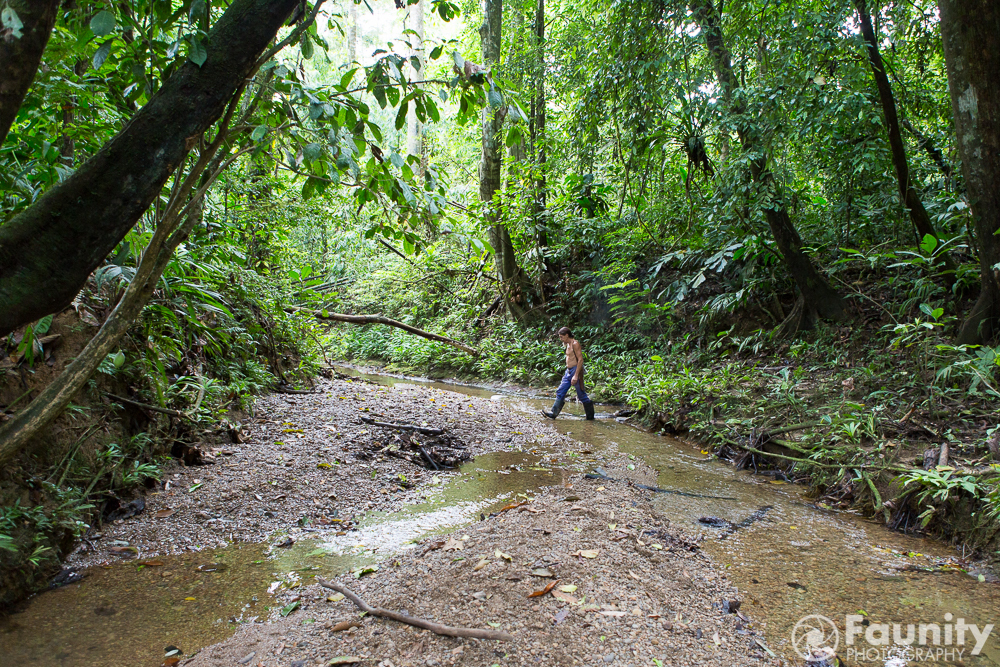
Just a few days after Trópica Verde had committed to the purchase, a severe earthquake struck on April 21, 1991, triggered by the subduction of tectonic plates. The consequences of this process of extreme erosion are still visible today. There were only a few fatalities, but solid structures—and bridges in particular—were severely damaged. For more than half a year, the region was inaccessible by road, bringing timber transport to a standstill.
At the same time, tourism and environmental awareness increased —or at least awareness of the economic potential of nature conservation. As a result, illegal deforestation declined. Livestock farming, which until then had been the main reason for deforestation, also gradually disappeared, as it was barely profitable and completely unsuitable for this region.
In the years that followed, we were able to influence developments around Finca Ninfa, which borders Curré directly. We were able to prevent further deforestation and find buyers whose goal was to preserve the land. Since then, these primary forest areas have been protected, and forest cover has expanded once again. Today, these forests form the foundation of the “Guardianes del Bosque” initiative, the “Guardians of the Forest.”
In fact, the moment when the Finca Curré was placed under the protection of Trópica Verde marked a turning point: the trend toward increasingly rapid deforestation was reversed.
The Return
After spending some time in Europe, I returned in 2008 and went for another walk in the woods. At Finca Curré, I was very surprised to notice that the former tractor path, which had since naturally become overgrown with trees again, had been cleared to a great width—almost like a road. I couldn’t find Roberto, but I understood that some owners of neighboring properties were planning “ecological” housing developments there. They wanted to take advantage of this extremely convenient access and give the impression that it was a public road. So I emailed Trópica Verde to let them know. That was, in a sense, my first official assignment.
On a day full of fortunate coincidences, I met several of the people involved. We talked and made it absolutely clear that there was no public right of way on the Finca Curré. I was glad to have returned just in time. The forest had probably been calling me. Because in the time leading up to my decision to return, I’d been having recurring nightmares about tractors and cars in the forest.
Guardians of the Forest
In 2009 and 2010, a few neighbors and I began hiking through the area together once a month. Our goal was to map the Ernesto Creek watershed using GPS and to monitor the condition of the forest, as development pressure was growing steadily. But just as twenty years earlier, it seemed that even more visible damage was needed before a collective response could materialize that would have enabled effective protection of the ecological corridor. The corridor was at increasing risk of being fragmented—and unfortunately, we had already witnessed far too much destruction.
During a subsequent inspection visit to Finca Ninfa, the forestry engineer from the Association for the Biological Corridor told me that she was considering terminating the contract with Trópica Verde regarding payment for environmental services. The property manager had not responded to her messages regarding scheduling an inspection. I asked her for some time to contact Trópica Verde. As a result, I was ultimately tasked with clearing the property boundaries to allow the inspection to take place.
In fact, Roberto had often been absent because he was very busy elsewhere. Later, he fell ill. He also explained to me that, as a rule, he did not follow any instructions that did not come directly from Trópica Verde. That was why he had not responded to the forestry engineer’s repeated messages. It was all a matter of misunderstandings and a lack of communication.
I offered to take his place if he wanted me to. By then, I had much more time than I had twenty years earlier. Roberto subsequently stepped down from his role and passed away a few years later—which, of course, had nothing to do with his resignation. Since 2011, I have therefore been the caretaker of Finca Curré. In addition to maintaining the property boundaries, I tend to a limited network of trails that can also be used for hiking. Since then, we’ve been in regular contact through my reports, which were initially annual and later became quarterly. Above all, though, we’ve met in person.
Representatives from Trópica Verde came to my home and hiked through the Finca Curré. Wolfgang and Gaby Schmitt were the first to do so in 2010 or 2011. Markus Eichenlaub joined us later. Together, we organized the first meeting at Finca Ninfa for neighbors committed to nature conservation. At that meeting, it was emphasized that we needed to get organized—ideally as an association—to establish an official structure and secure support. There were only a few of us back then, and it would take more than ten years for these ideas to become a reality. Only the name was set from the very beginning: “Guardianes del Bosque”—“Guardians of the Forest.” The name became even more fitting for me when I learned that the word “wak,” plural “wakpa,” in the Bribri language means both “people” and “guardians.” The people of the tapir are the guardians of the tapir. Talamanca’s clan system has made it possible to protect nature through shared responsibilities—a very inspiring model.
The Development of the Project
In 2016, Lina came here to work on her geography thesis, in which she examined the importance of Finca Curré for local nature conservation. Not only did she create some beautiful maps that are still very useful to me today, but she also dispelled any doubts that might have remained regarding the ecological and strategic value of the property.
My truly memorable reunion with Trópica Verde took place in 2017.
Stefan and Michael came to visit. Although we had led very different lives, we felt the same connection as we used to. We still shared the same dedication and idealism.
During an unforgettable brainstorming session at Finca Ninfa, the idea for the Guardianes del Bosque finally took shape—with Trópica Verde as our fairy godmother. We drafted the “Declaration on Collaborative Nature Conservation.” Our goal was to collect signatures from forest owners who would commit to protecting their land and, in the long term, lay the groundwork for founding an association. But in the end, I was largely on my own with this task. With my limited resources, I was only able to collect a few signatures. Still, together they represented about 250 hectares of forest.
In light of the increasingly rapid and chaotic local “development,” it became increasingly clear that effective and sustainable forest conservation would only be possible through community cooperation.
The Founding of AsoGuaBo
In 2023, we finally succeeded in founding our organization with a diverse group of neighbors: the Guardianes del Bosque, or AsoGuaBo for short. Most of the participants had only been living in the region for a few years. Some were Costa Ricans, while others came from abroad. What united us was our environmental awareness. Trópica Verde sponsored the founding of our organization. Added to this was Christina’s generous donation and her great trust in us. This enabled us to officially register the association and participate in training workshops. We drafted a second version of the declaration on community-based nature conservation. In doing so, we expanded both the scope of our work and the possible categories of participation. In addition to the original category of “nature conservation,” we added the categories “ecological gardens” and “regeneration.” This allows more property owners to get involved. At the same time, it enables us to build a network for observation and monitoring and to implement citizen science programs. In doing so, we collaborate with other local organizations, most of which are already partners of Trópica Verde.
Back in 2022, Stefan had already organized the first gathering of the groups affiliated with Trópica Verde in Costa Rica. These gatherings now take place every year. They’re like a big family celebration: an opportunity to get to know one another and to reaffirm, time and again, the bonds of brotherhood and sisterhood we feel toward one another.
A Story That Continues
Everything that has happened since then up to the present has already been very well documented. That’s why I don’t need to add my annual prose to the many digital documents that already exist.
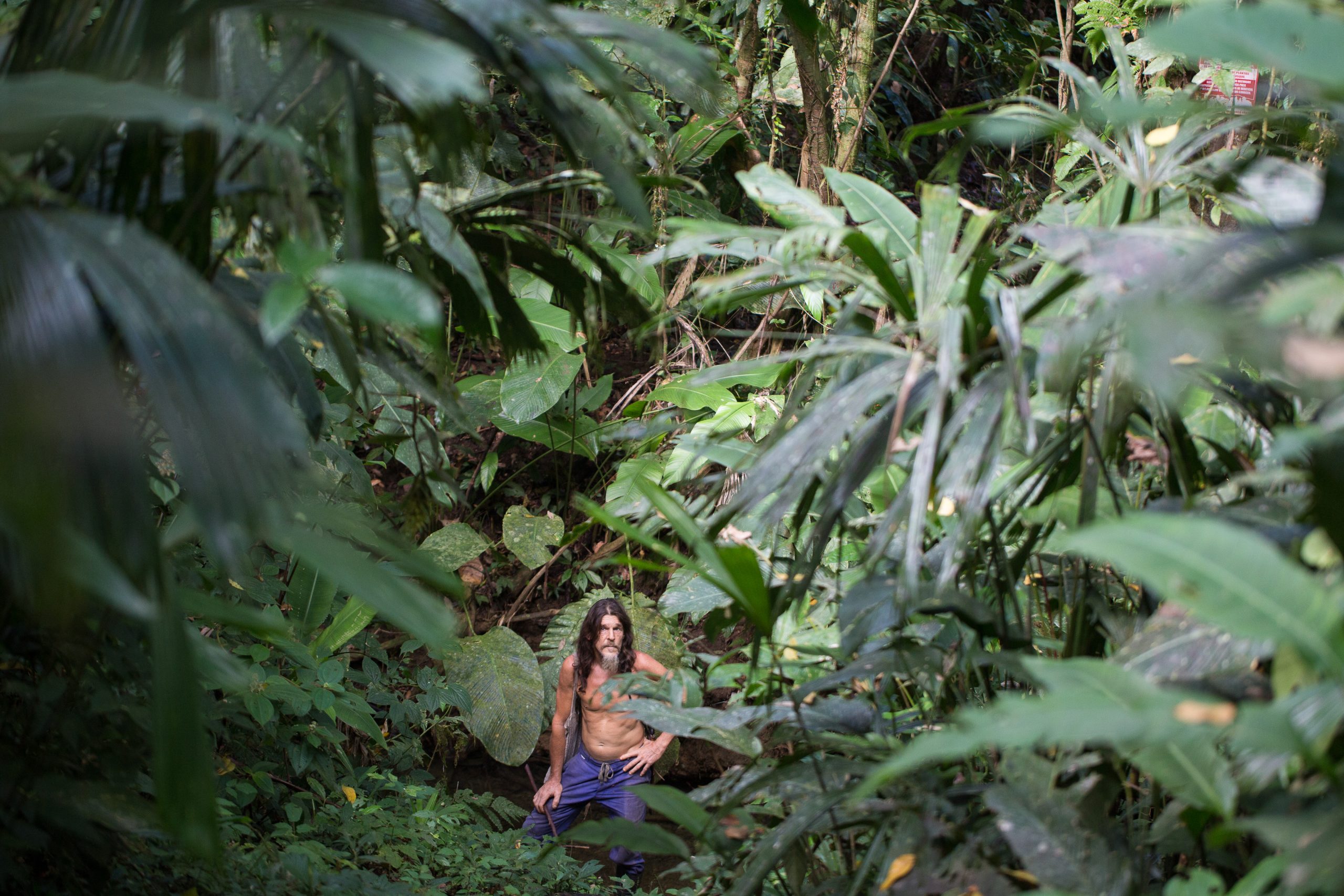
And they lived happily ever after and planted many trees.
And Almendrón, Almendrón—this story is almost over now.
But I must mention that I owe it to Trópica Verde that I was able to write it down in the first place.
In 2024, when I was on the verge of losing my sight, the touching and generous solidarity shown through your donations made it possible for me to pay for my eye surgery.
And so, in the end, I feel above all a deep sense of gratitude:
for the water of the stream,
for our collaboration,
for my eyes.
I have great respect for Trópica Verde’s honest approach to work, which transcends cultural boundaries, and I admire all the achievements we can see today—and which continue to grow.
Thierry
June 22, 2026
