
Can AI Save Nature?
Artificial intelligence (AI), designed to map the night sky, suddenly starts recognizing whale sharks in Instagram photos. It sounds like science fiction, but it’s actually an example of how AI is used in nature conservation. Dr. Frauke Fischer’s new book explores this intersection.
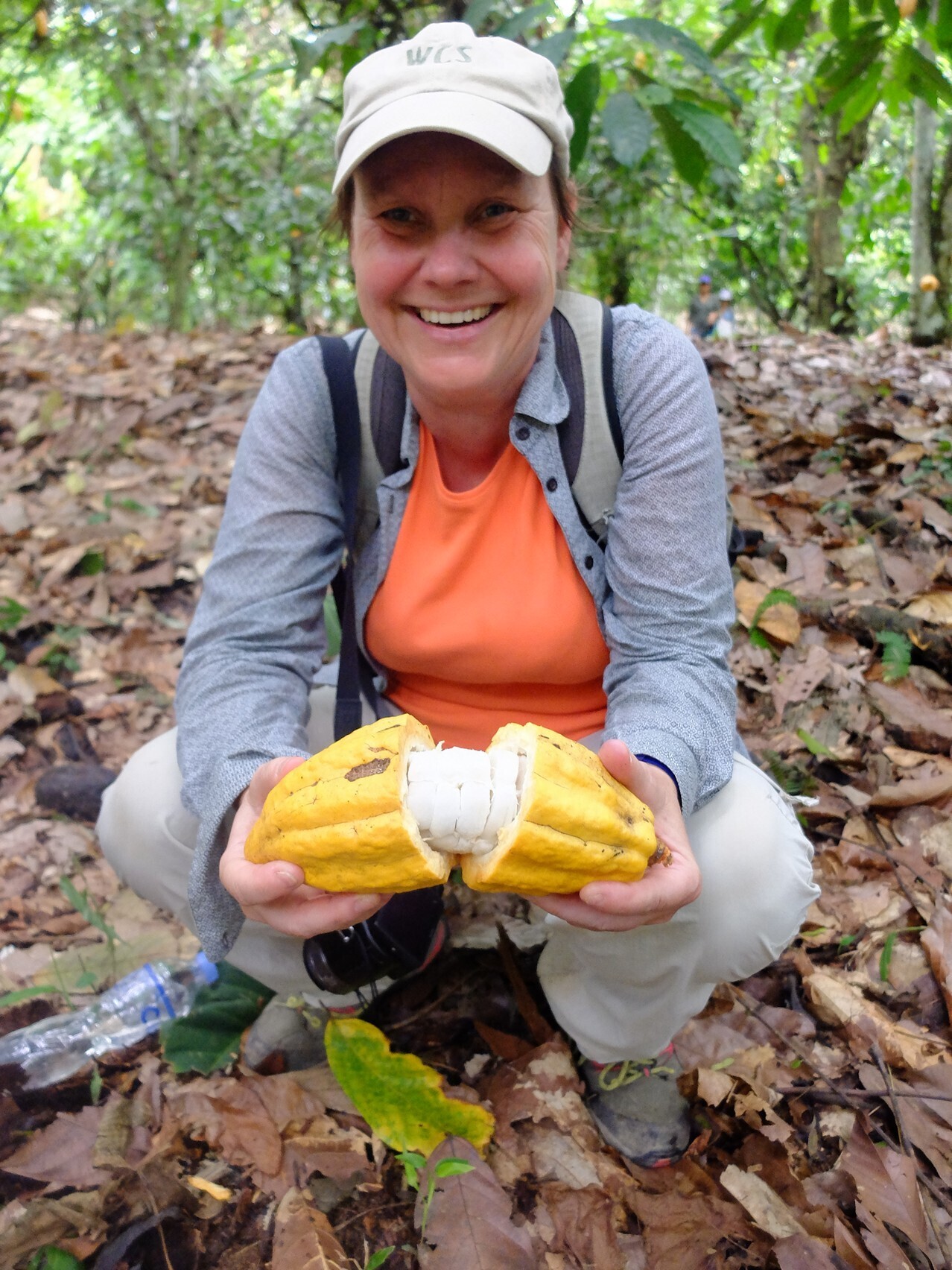
Frauke Fischer, who holds a Ph.D. in biology, founded the agency “auf!” in 2003, which advises companies on their commitment to sustainability, climate protection, and the preservation of biodiversity. She is the co-author of the book “Planet 3.0 – Climate.Life.Future,” published by oekom Verlag, as well as “The Palm Oil Compass,” “What Has the Mosquito Ever Done for Us?” and “Whales Make the Weather.” In October 2025, oekom Verlag will publish her book “Can AI Save Nature? How Artificial Intelligence Can Protect Animal Species and Ecosystems and Revolutionize Environmental Protection—Opportunities and Risks of the Technology for Our Planet,” which she co-authored with environmental economist Dr. Hilke Oberhansberg (216 pages, €26.00, ISBN 978-3-98726-163-3).
She has a long history with Tropica Verde: As a student in Frankfurt, she witnessed the founding of our association by her fellow students. Today, she is a member herself.
We’re giving away three signed copies!
Frauke Fischer is providing us with three copies of “Can AI Save Nature?” signed by her, which we’ll be giving away to our subscribers.
Send us an email by October 25, 2026, with the keyword “AI” to Presse@tropica-verde.de. The decision is final.
AI in Nature Conservation: Dr. Frauke Fischer in Conversation with Tropica Verde
You've been a member of Tropica Verde for a few years now. Maybe you could briefly tell us what connects you to the organization and where you see overlaps with your research.
First of all, my connection to it, of course, is that I witnessed its founding, so to speak, firsthand. When I was a student, Tropica Verde was founded by some of my fellow students who were a few semesters ahead of me. I think Stefan Rother was there at the founding, too, wasn’t he?
Yes, exactly.
Exactly, and that’s why it was naturally a topic of discussion at our university back then—I was there myself, after all. That’s how I found out about it. And since I’m a tropical biologist myself, I’m very well aware of how important it is to protect tropical ecosystems. And what I like about Tropica Verde, of course, is that they’re actually doing things on the ground there. And obviously, they’re doing things that make sense, because some of the projects have been around for a very, very long time.

In your new book, you posed the question: Can AI save nature? Could you tell us a little bit about that—perhaps how you came to choose this topic?
I actually came across this topic because I have colleagues and friends who founded a company in the U.S. that provides AI-based tools—not only for conservation organizations, but also for businesses and government agencies—to help identify human impacts on nature more quickly and better protect intact natural areas. And another friend of mine is conducting research on this topic. That’s why I found it really interesting to combine this technical topic with the issue of nature conservation.
And at the same time—as we all know—our goal must be to reach as many people as possible with this issue. And of course, that made me think once again that a topic like AI can reach more people—or even additional people—who might not be at the very top of the list for conservation organizations or conservation and wildlife biologists. I personally find it very, very exciting because you can really do some pretty cool things with it.
Could you share a few examples of that—some standout examples?
This friend of mine who runs a company in the U.S.—for example, they recently awarded a major prize for research on how to detect wildfires as early as possible. And that’s also kind of the focus of my colleague, who’s conducting scientific research on this, because animals know a lot of things that we don’t. For example, there are certain species of beetles that always lay their eggs in trees that have just burned—as soon as the tree has cooled down, they lay their eggs inside. And these animals are extremely good at detecting fire, because, of course, they have to make sure they’re the first ones on the scene. Modern, very, very small sensors—the smallest ones weigh just 0.2 grams—might already be able to help us, through these large insects, detect forest fires in the future earlier than we would have been able to using technical smoke detectors or optical methods. Or here’s another example I think is really cool: an AI that was originally designed to analyze the starry sky was trained to recognize the skin patterns of whale sharks.
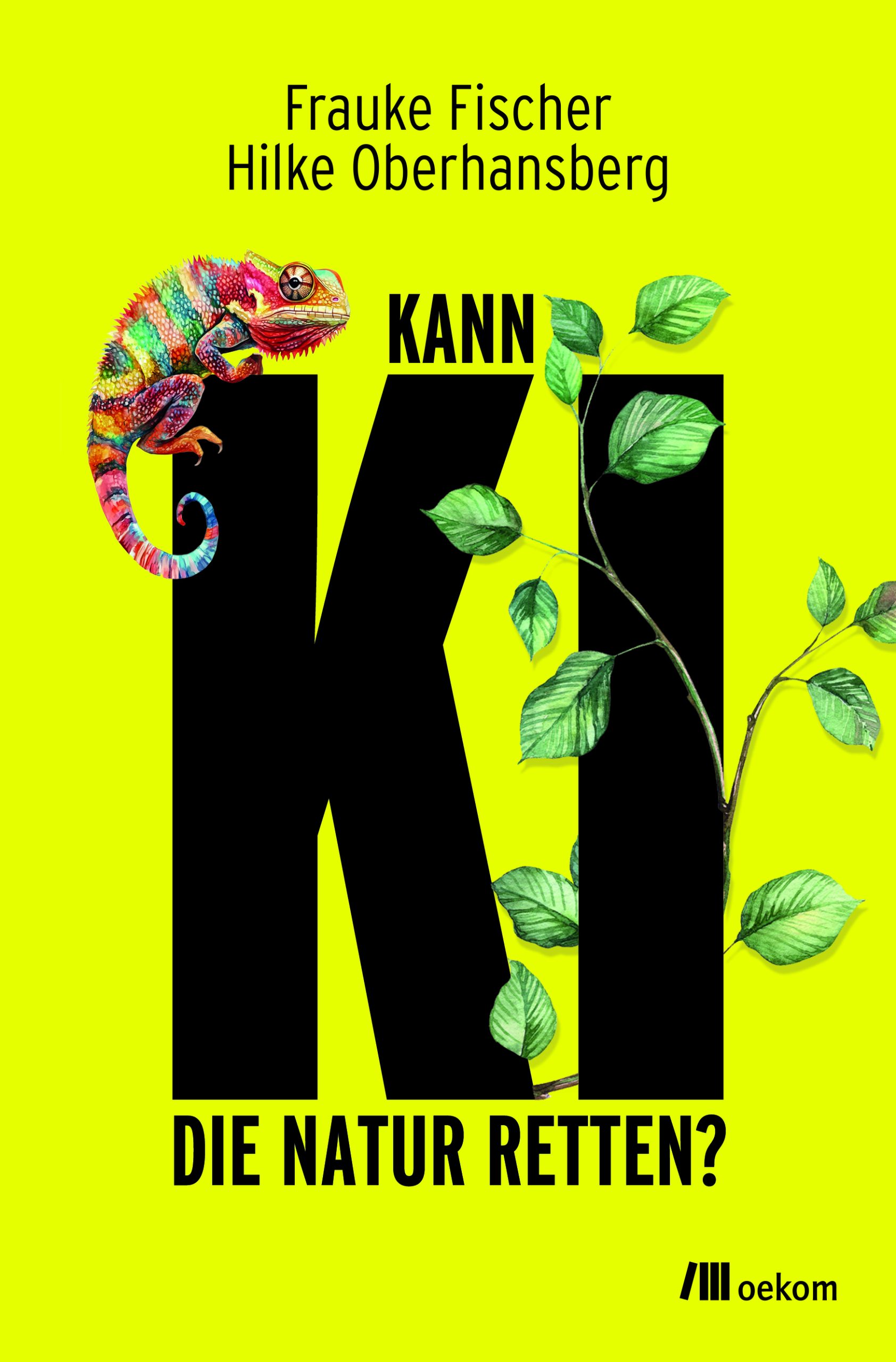
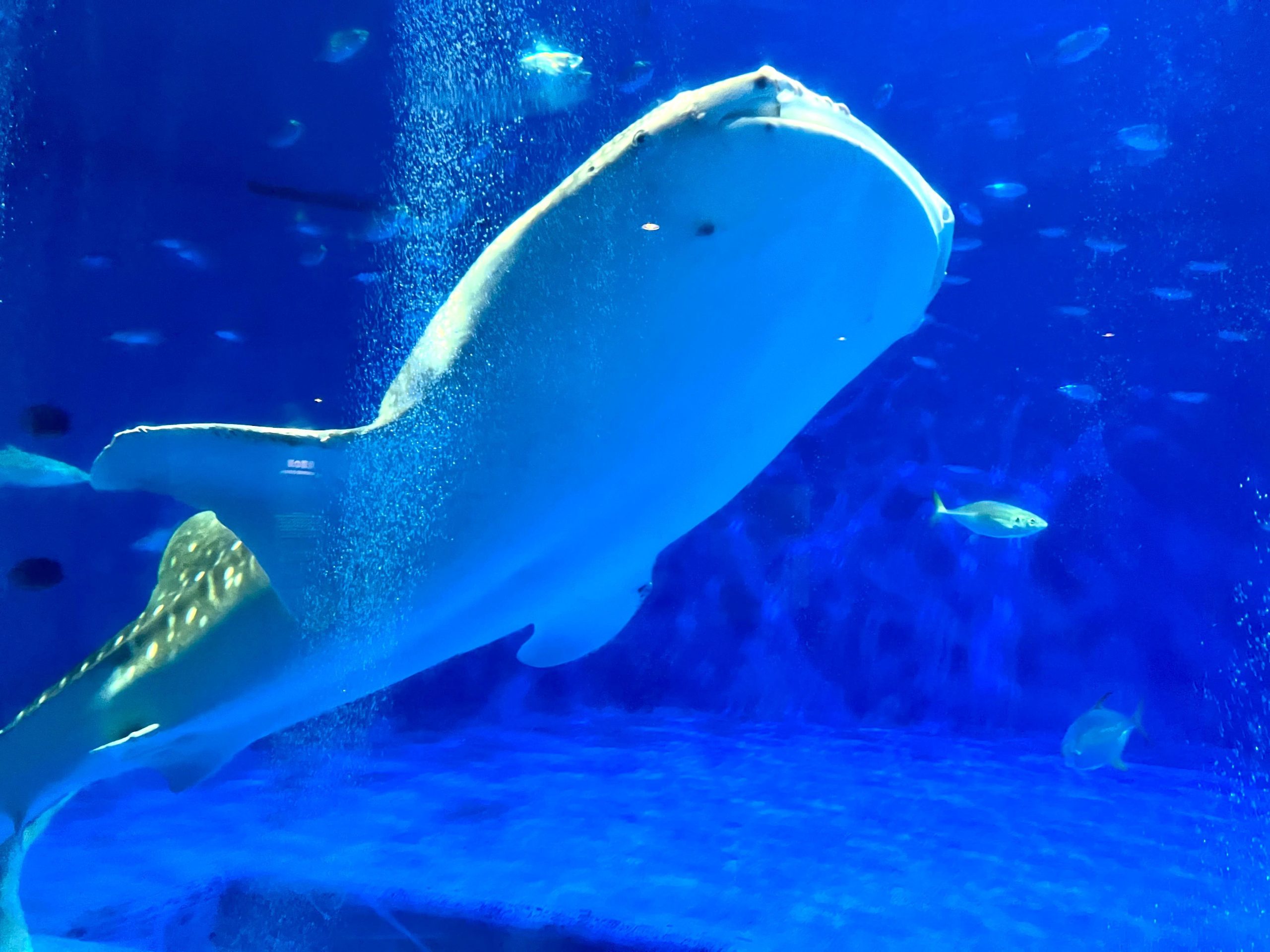
It’s important to know that the whale shark wasn’t scientifically described until the mid-19th century, and up until 1986, we had only 300 recorded sightings of whale sharks. Most of these were animals that had become entangled in fishing nets or were found dead on the beach. And now, all kinds of recreational divers have cameras and are taking photos of whale sharks. They no longer have to send these photos to any scientific institution—instead, they post them on Instagram, TikTok, or wherever. And the AI has been trained on these images of whale sharks and scans social media accounts for photos of them. AI is very good at pattern recognition. This specific AI has created a database in which the whale sharks are assigned individual numbers and, in effect, a data sheet. And that’s why we now know 3,000 whale sharks individually. We know where they are, what routes they swim, and so on.
And that, in turn, can be put to use: If you let the AI cross-reference this data with all kinds of other information on ocean parameters, food availability, temperature, current direction, etc., then the AI can predict where the whale sharks will be in the near future. And one of the main causes of death for whale sharks is certainly still collisions with ships or getting entangled in fishing nets. And this could actually be prevented: If this data were made available to fishermen or shipowners, they could prevent such encounters with whale sharks—which are, after all, also detrimental to them—in the future. That’s actually a really cool application for nature conservation.
And when we go to the tropics or tropical rainforests: There, you can work with soundscapes—in other words, you can hang up these sound boxes. You train the AI beforehand with what we might call a “background noise” in German, and provide it with information about the forest’s health. And from there, it can determine on its own: Okay, based on what I’ve heard here, the forest is in such-and-such a condition. And that’s, of course, pretty cool, too.
Of course, the example involving the tropics is particularly interesting for us as well. The examples you mentioned are often very specific AI applications tailored to the respective use case, and they are usually based on proprietary data.
Yes, well, that can be infinitely complex. Perhaps this already brings us close to the threats posed by AI. What we’ll certainly have to do in the future—as nature conservation organizations, but also in research—is ensure that AI operates within clearly defined and secure data environments. After all, AI is actually “dumb.” And of course, it can only generate information based on the data made available to it. And if you let it roam freely on the internet, where we know that the majority of the information is now false—if AI generates its knowledge based on this false information, then naturally, what comes out is also false. And that’s why, especially in nature conservation, we need to ensure that when we use AI in such sensitive areas, we ideally have data sets that contain only data we know to be accurate. Otherwise, the AI will naturally spit out all kinds of nonsense.
Of course, the example involving the tropics is particularly interesting for us as well. The examples you mentioned are often very specific AI applications tailored to the respective use case, and they are usually based on proprietary data.
Yes, well, that can be infinitely complex. Perhaps this already brings us close to the threats posed by AI. What we’ll certainly have to do in the future—as nature conservation organizations, but also in research—is ensure that AI operates within clearly defined and secure data environments. After all, AI is actually “dumb.” And of course, it can only generate information based on the data made available to it. And if you let it roam freely on the internet, where we know that the majority of the information is now false—if AI generates its knowledge based on this false information, then naturally, what comes out is also false. And that’s why, especially in nature conservation, we need to ensure that when we use AI in such sensitive areas, we ideally have data sets that contain only data we know to be accurate. Otherwise, the AI will naturally spit out all kinds of nonsense.
That would have been part of my question: the data. But on the other hand, there are also some systemic issues, because large generative AI models are always very closely linked to questions of energy and water consumption, which might then conflict with nature conservation goals. So my question is, how did you shed light on this—including from the perspective of: Where are these large models actually needed?
This is, of course, a huge problem, because all AI applications are, by their very nature, harmful to the environment. They consume enormous amounts of water, enormous amounts of energy, and enormous amounts of mineral resources—which is leading to crises, particularly in tropical ecosystems. My argument for using AI in nature conservation, however, is that nature conservation applications make up a tiny, tiny, tiny fraction of the total. In other words, even if we were to stop using AI for nature conservation, AI would still be just as harmful globally as it would be without its use in nature conservation. So what we need to do is this: We mustn’t dismiss its use in nature conservation as pointless; instead, we need to be smarter overall—and yes, more cautious in our use of AI.
Here’s an example I always give: When I was in college, there was no internet yet, and no smartphones either. If you wanted to know something, you’d first go to the library, pick up a book, and read it. Or you’d ask someone who might know the answer. And if we take something as mundane as, “How do I make a pancake?”—back then, I would have called my grandma, or I would have gone to the library to see if I could find a cookbook that explained it. Then, at some point, we reached a stage where you’d definitely have Googled it. And today, people ask AI five times a day if it could quickly list the ten best pancake recipes for them again. And the information you get is always the same. In the end, you always know how to make a pancake—but the resource consumption varies enormously between these three models. And yes, we have to learn this somehow: that we shouldn’t always turn to AI for every little thing. But of course there are also nonsensical applications in nature conservation—for meaningful applications in nature conservation, however, I’d still be in favor of using it, and I’d prefer that we use less AI for other things.
And here’s what you might have been getting at: Since most questions are so trivial, you can now essentially add an intermediate level. Instead of having the AI analyze all available data sources worldwide to figure out how to make pancakes, you can introduce these intermediate levels so that the AI knows: “Ah, this is about cooking—I’ll just look in this tiny data space where all the recipes are.” And of course, that requires less energy, water, and raw materials.”
You’ve already mentioned a few examples that you also discuss in your book. Where do you see—perhaps with an eye toward Tropica Verde as a tropical conservation organization—specific applications for us as an organization or for similar organizations?
I was in Kenya last year and helped train game wardens there on how to use these smart camera traps and sound boxes. And both these camera traps and sound boxes are now extremely affordable. So it doesn’t cost much, and you can reuse them over and over again—they’re not disposable products. I can definitely see how this could be useful, for example, in reforestation programs—and once you’ve gotten the hang of how to assess forest health based on these soundscapes—I think it could be an interesting tool for Tropica Verde. Also because it’s obviously a great way to communicate: because you can still give people who can’t travel to Costa Rica a very, very close look at the work being done there. And of course, you can do that with these camera trap photos, and you can do it with these soundscapes.
And, of course, purely theoretically, we could also involve members or interested parties through a citizen science approach like this. So when we look at these camera trap photos, the AI can be trained to recognize jaguars, for example. But it’s still a good idea to have a human observer take another look at them. So let’s say you have 40,000 photos; you train the AI to say, “Please look for jaguars in these.” Then the AI comes back and says, “Here, there’s a jaguar in number 100.” And those 100 photos could then be reviewed by citizen scientists, so to speak, to confirm whether there really was a jaguar in that one.
The interview was conducted and edited by Paul Heß, a volunteer with Tropica Verde e.V.

Make a donation!

Become a member!

Compensate for CO2!