
Is everything cool or what?
Interesting and Critical Facts About a Crooked Thing
That was the headline of an article by our project coordinator, Dr. Stefan Rother, published in 1999 in TROPICA VERDE SPECIAL in 1999—and it remains highly relevant today, because the structural problems of banana cultivation in vast monocultures have, unfortunately, tended to worsen again following a period of improvement:
- Deforestation of tropical forests to create new farmland,
- extensive use of pesticides in the plantations and from the air,
- Pollution of waterways, the ocean, and groundwater,
- Diseases among workers and the resident population, infertility, miscarriages,
- Decline in Wildlife Populations and Loss of Biodiversity
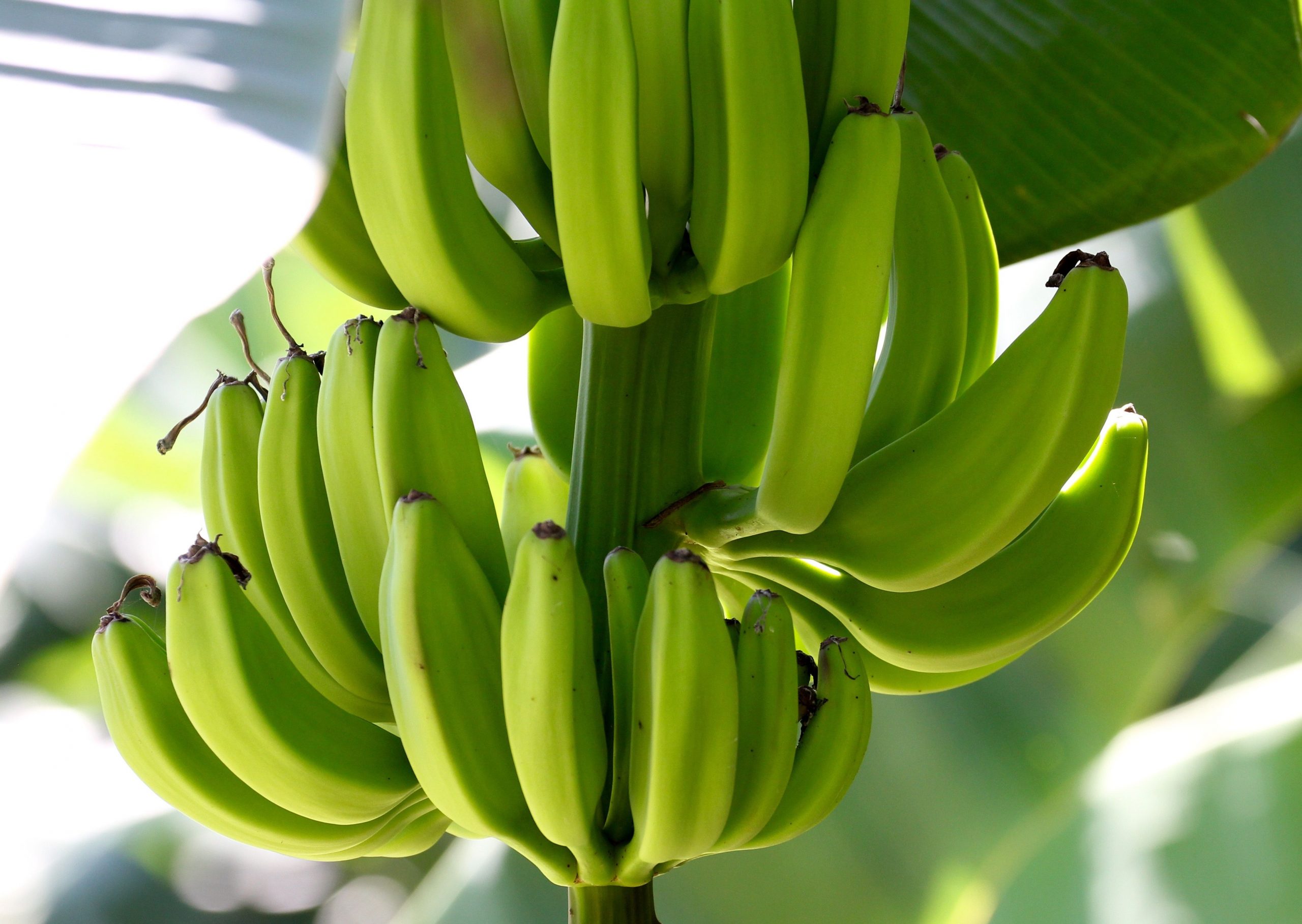
Specifically: To combat the more than 70 species of bacteria, fungi, worms, and insects—which have no natural predators in monocultures—tons of pesticides are applied, which are washed into the streams during the frequent tropical rains. In addition, the banana plants are wrapped in blue plastic bags impregnated with pesticides until harvest, but these bags contaminate workers during harvesting and in the washing facilities. Around 33,000 people live in this area, and they no longer have access to clean drinking water.
I would love to write here about the progress made in reducing the use of chemicals, increasing nature conservation, and improving working and living conditions for employees, but we at Tropica Verde e.V. are committed to transparency and education.
High Levels of Pesticide Contamination in the Vicinity of Banana Plantations
According to a new study by the United Nations Development Program (UNDP) from 2019, 2022, and 2023 , a mixture of 33 pesticides was detected on the Caribbean side in the Sixaola River , which forms the border , and in the Gandoca Lagoon—a nature reserve— with 13 of these alone exceeding permissible levels by up to 24 times. The study identified substances that, while banned in Europe and North America, are still permitted for export to countries such as Costa Rica. You can find more detailed information and the chart below in this article from Costa Rica (in Spanish).

For many years, the Rainforest Alliance has also been working in the Sixaola region to improve production conditions on banana plantations through a certification system, but many farms continue to use pesticides without oversight:
Local authorities usually lack the capacity to ensure the safe storage and transport of these toxic pesticides. Many farmers lack the knowledge and training to protect themselves from the risks these products pose to their health and the environment. This has devastating effects on ecosystems and biodiversity, as well as on the health of producers, workers, and farming communities (report dated September 10, 2021).
Although Costa Rica has designated many nature reserves over the past decades and established two key nature conservation agencies—MINAE and SINAC— ecotourism plays a major role, and Costa Ricans are proud of their country’s positive image, this small country is the third-largest exporter of pineapples and, along with Ecuador, one of the most important banana producers. And this has consequences for the environment, because according to a 2020 FAO survey, Costa Rica is the country with the highest consumption of agrochemicals in the world.
But how could this have happened at all, despite the truly exemplary environmental protection laws? For one thing, at the local, lower levels of government, there is neither the staffing to carry out systematic monitoring using appropriate analytical methods and laboratories, nor the necessary authority to impose sanctions on producers.
Dangerous pesticides are to be banned
Even though these facts are shocking , this in no way diminishes our commitment to protect, within the limits of our capabilities, the tropical forests, wildlife, and biodiversity and to advocate for healthy and sustainable living and working conditions for the local population—including environmental education in schools.
There is currently hope in the form of a bipartisan legislative initiative in Congress to finally ban the most dangerous pesticides while providing financial incentives to farms that reduce their use of chemicals.
The most significant effort is a recent bill introduced by Representative Kattia Cambrionero with cross-party support that proposes a ban on highly hazardous pesticides. (Source: UNDP)

In addition, some time ago, a director at the Republic’s Environmental Agency required the government to issue national guidelines on pesticide use, to be drafted with the participation of the ministries of the environment, agriculture, and health. However, due to profound conflicting objectives, this has still not happened. Here, export-oriented economic interests are pitted against the sustainable protection of health and the environment. We are familiar with this conflict here as well.
Only gradually is the realization taking hold that the current practice of growing bananas and pineapples in monocultures—with their excessive use of pesticides—not only does more harm than good to Costa Rica, but will soon no longer be profitable for the producers themselves, as they are now caught in an economic vicious cycle:
- Price Pressure: In order to survive the enormous price pressure from our fruit importers and the decline in prices over the past 20 years, the focus has not only been on increasing crop yields; rather, the massive use of pesticides is intended primarily to prevent crop losses caused by pests.
- Lobbying: Added to this is the detrimental role played by agrochemical companies such as Monsanto and Bayer, which use effective consulting and lobbying efforts to sell their products.
- Dependence: This, in turn, places agricultural producers in a position of heavy dependence and further reduces their profits, which are already very low.
- Cost savings: Where could costs be cut and profits increased? In wages—so that in banana and pineapple production, day laborers from Panama and Nicaragua predominately work under poor conditions.
- At the same time, the EU and our consumers are rightly demanding healthy fruit free of pesticide residues, with certification, the TransFair seal, and working conditions that respect human dignity.
- Global Market: Two-thirds of the global market—from cultivation to the store shelf—is dominated by the U.S. fruit multinationals Chiquita (formerly United Fruit), Dole (Standard Fruit), and Del Monte.
- Profit Distribution: Large corporations take nearly one-third of the retail price, which is usually between 0.99 and 1.50 euros per kilo. About 40 percent goes to retailers, and one-sixth to the ripening company. Only one-tenth remains for the plantations.
- Prices are under pressure: Overproduction has been driving prices down for years. Currently, at discount chains like Aldi, a kilo can be bought for as little as 79 cents. Nevertheless, per capita consumption is declining in Europe and the U.S.
- Susceptibility of the variety: Cavendish is currently the most widely grown variety—a hybrid without viable seeds. However, this variety is affected by a persistent soil fungus from Asia that threatens all monocultures worldwide. Of the more than 1,500 registered banana varieties, however, there is no fungus-resistant alternative.
Are there any ways out or solutions?
What led to a significant reduction in pesticide use years ago in coffee, cocoa, and melon cultivation must now finally work for bananas as well:
Away from monocultures, toward near-natural agroforestry mixed cropping systems with trees, shrubs, and ground cover plants. Away from crop-dusting planes and plastic bags, toward direct injections into the plant. Away from mass production, which has led to oversupply and falling prices, toward fair producer prices.
And this is where our German retail chains—REWE, ALDI, LIDL, and EDEKA—bear responsibility, as they are the dominant importers that have driven down prices. The Supply Chain Act now requires them to contribute to improving living and working conditions throughout the supply chain. As commendable as individual flagship projects may be (such as REWE’s San San and Nogal), as long as the toxic cocktail in the Sixaola border river has not been eliminated, the all-clear has not been given. We at Tropica Verde e.V. will continue to monitor this issue closely.

Wolfgang Schmitt
BECOME A MEMBER
Nature, environmental and climate protection need a lobby now more than ever. With your membership you give us your voice for our work. The more members we represent, the stronger our standing vis-à-vis politics and business.
As a member of Tropica Verde you have many opportunities. You can get actively involved in the association's work, volunteer at events and exchange ideas with like-minded people on topics such as rainforest protection, climate protection, environmental education and more. Or you can simply support our projects regularly with your membership fee and help to preserve the rainforest in Costa Rica in the long term. By becoming a member of Tropica Verde, you are promoting sustainable climate protection and helping us to continuously develop and expand conservation projects.
