Support from Dunkelgrün for Tropica Verde
Dunkelgrün Regenwald Projekte e.V. has supported our Reserva projects in Costa Rica with 1,000 euros. The association’s members selected us through a vote from among a number of German-speaking rainforest organizations that Dunkelgrün features on its website.
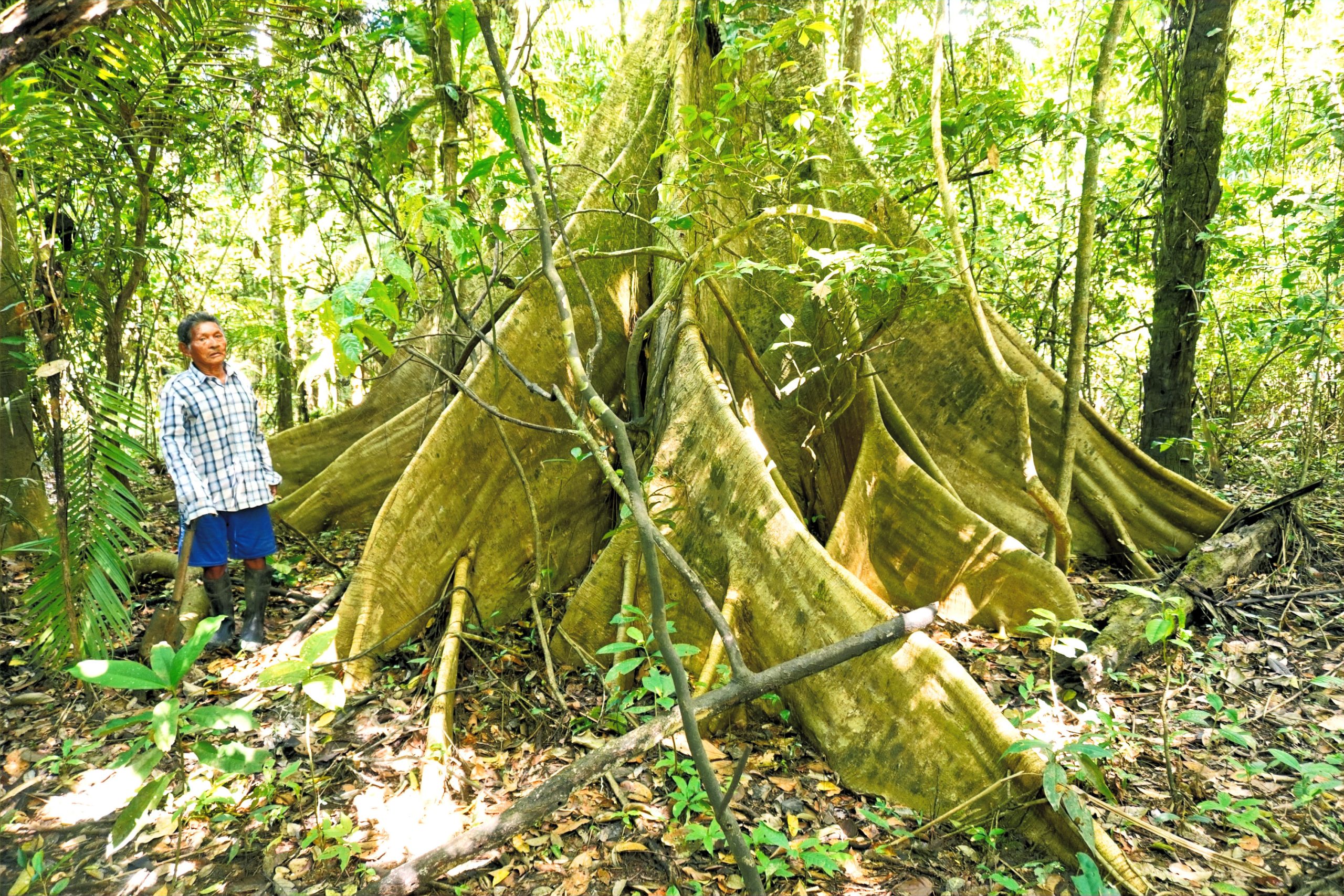
Felix co-founded the organization five years ago; its origins date back eight years: At that time, as part of his master’s thesis, he was researching rainforest organizations in the Peruvian Amazon. Today, Dunkelgrün is active on two levels: On the one hand, the organization serves as a platform to connect and support other rainforest organizations. On the other hand, for the past four years, it has been assisting an indigenous community in the tri-border region of Peru, Colombia, and Brazil in establishing its own nature reserve.
For more information about Dunkelgrün and its projects, visit www.regenwaldprojekte.org.
In this interview: Felix Keudell of Dunkelgrün Regenwald Projekte e.V.
Tropica Verde: Felix, please introduce yourself and your club, Dunkelgrün, briefly. What is your mission, and how did the club come to be founded?
Felix von Keudell: We founded the organization Dunkelgrün Regenwald Projekte e.V. about five years ago. But it actually all started eight years ago. It began when I was writing my master’s thesis in Peru on rainforest organizations in the Peruvian Amazon. I was there at the time, naturally got involved with them, and wanted to find out: What do they actually need? How can you Support clubs and and therefore more How can we make an impact on the rainforest? And because I was there on the ground and got to know the local organizations and other NGOs, I came to understand more and more clearly what they were actually lacking. Then I took a really systematic, consultative approach and asked myself: Okay, what do they need? And once I understood what they really needed—and after I’d started my studies at the Yale School of the Environment—I decided to found this organization.
The original idea was actually to turn this into a for-profit organization—a social business—to provide these rainforest organizations with nature-based solutions and nature finance in the form of carbon credits. Because I realized that they receive donations that fluctuate wildly. It’s always up and down. And how can you prevent them from constantly having to worry about whether the money will come in? That’s obviously extreme. I’ve seen people who have truly given their all to this cause, invested almost their entire inheritance in it, and essentially lived on nothing. But this Their determination was so strong that they managed to do it anyway.
We founded the association after we’d completed two or three collaborative projects. One was for the Austrian Rainforest Initiative and the La Gamba Tropical Research Station—we launched a marketing campaign for them. And then we moved on: We collaborated with a Brazilian project that manages a vast area, the Regenwald-Institut e.V. Behind “Dunkelgrün” lies the desire to do more for the Amazon rainforest.
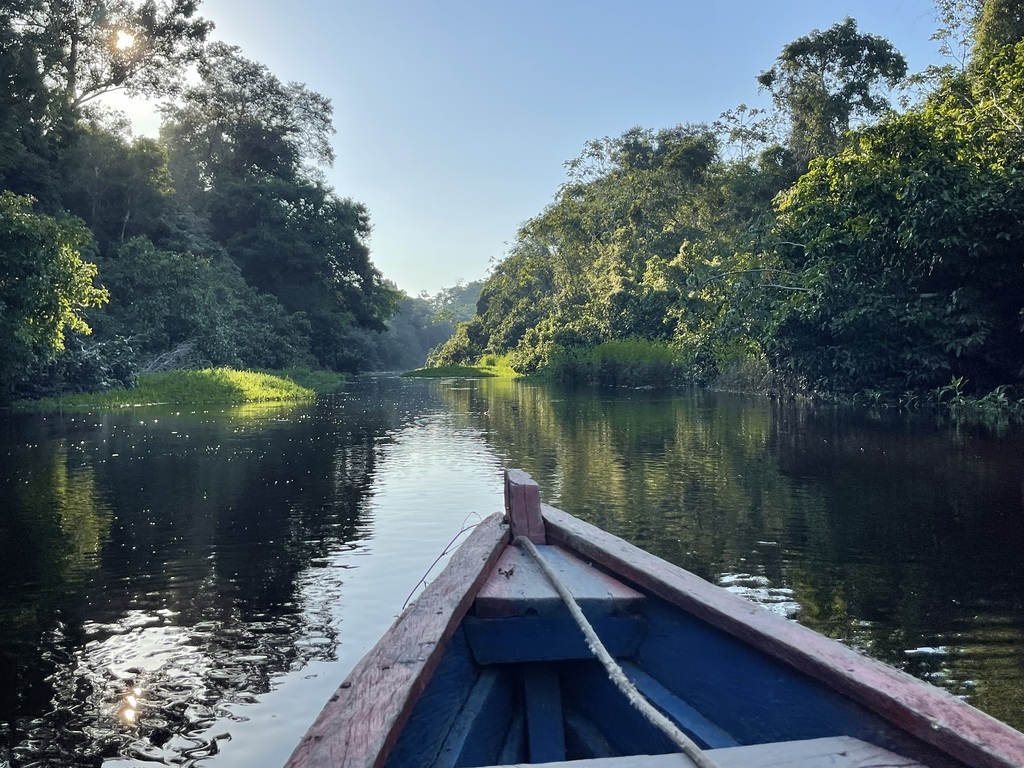
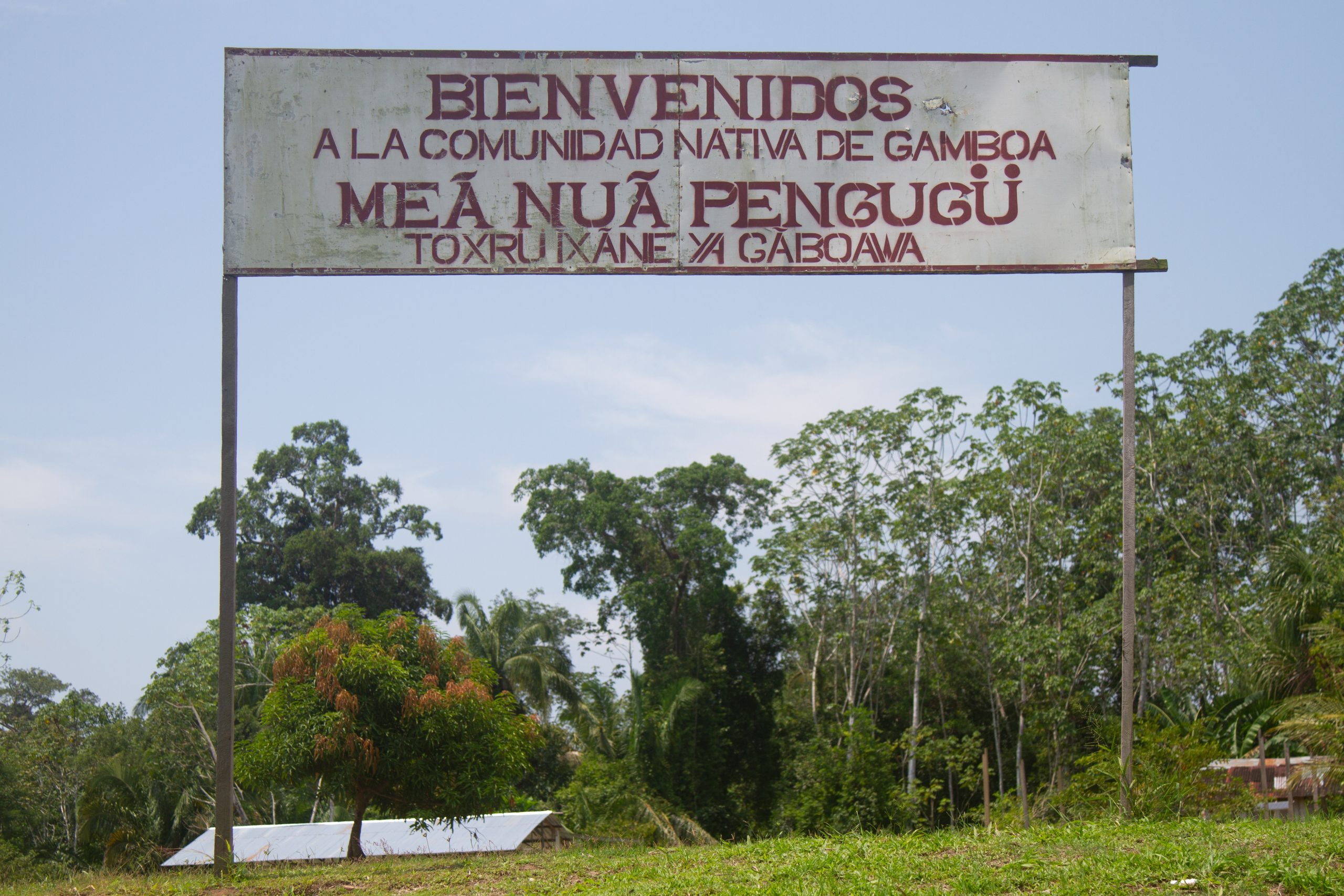
We’ve been working toward this goal in two ways. First, through collaboration: We’ve created a platform on our website and help out with smaller tasks. After a while, however, we realized that we should actually start our own project, because this support alone isn’t enough to really make a difference. And so we launched our own rainforest project in the Amazon It all started almost spontaneously. I was on the Amazon River in the tri-border region of Colombia, Brazil, and Peru—I was on the Colombian side, while the project is on the Peruvian side. There, I met an indigenous community that had expanded its territory. We decided we wanted to support them and discussed it with them. Since then, we’ve had our own project, which has been running for four years. We also regularly send friends, acquaintances, and volunteers there and fund reforestation efforts, but above all, the development of a nature reserve that the community itself has designated and uses—primarily for tourism, which is relatively widespread there.
Tropica Verde: You wrote your master’s thesis in Peru, so you’re often working there yourself. What’s the work like there, and how does it differ from what you do in Germany?
Felix von Keudell: On the ground, motivation is, of course, extremely high. That’s something truly wonderful. At the same time, however, the work in Germany is also extremely important. You always have to recognize that there’s a duality there—I’ve observed that quite often. There are actually always two organizations: One focuses on Germany, works with donors, raises funds, organizes, and spreads the word. And then there’s a second organization on the ground that carries out the projects—that is, handles actual project management and implementation. That’s how, for example, the Austrians’ Rainforest and the La Gamba Tropical Station work together: one side raises funds, the other carries out the projects. We haven’t quite reached that point yet, but that’s our goal. We also want to build a dual structure: There is a registered indigenous cooperative on the ground that carries out the work, and we provide funding, document the process, and coordinate efforts remotely.
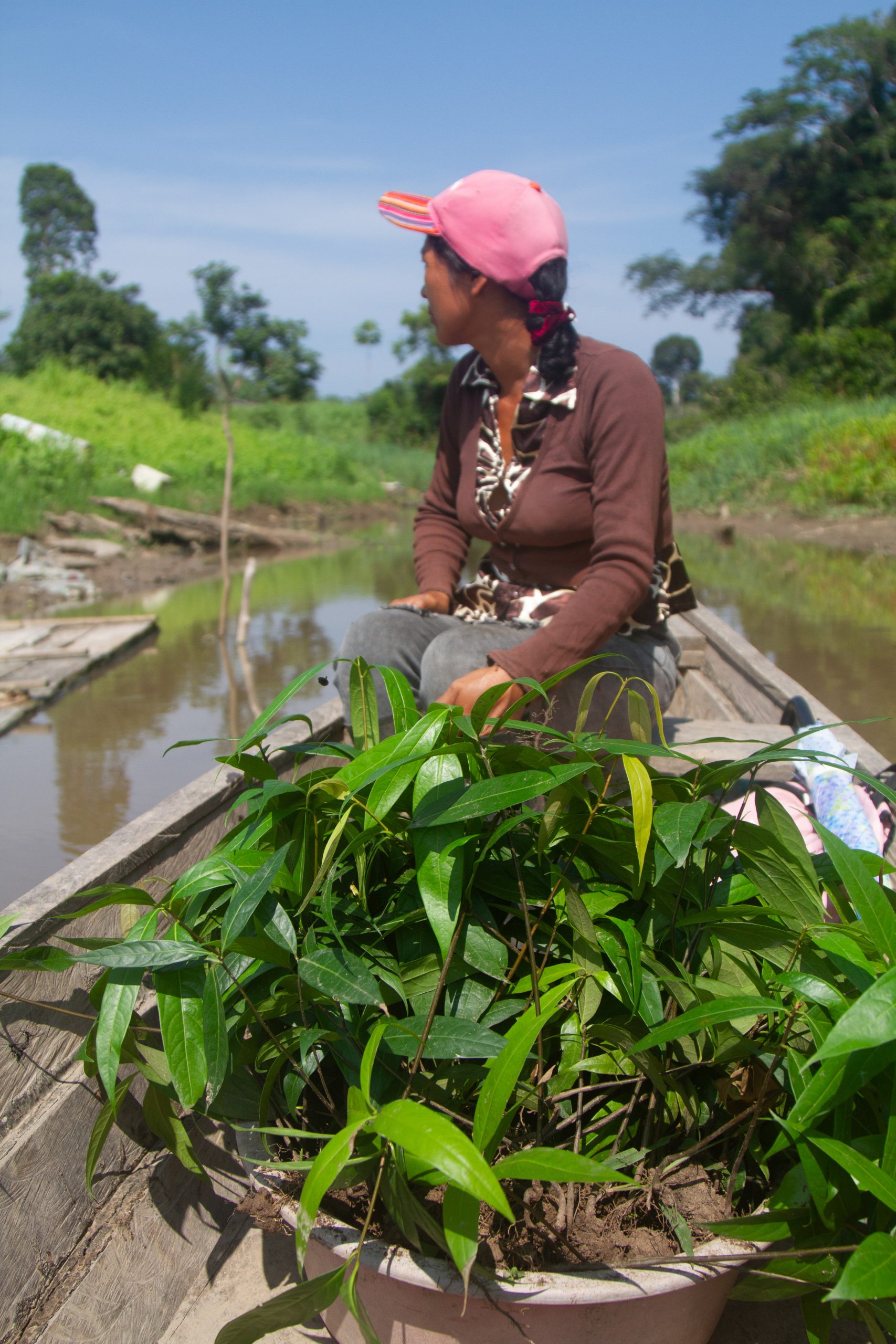
But once you’re actually there, you realize: It’s a whole different world. You’re much more immersed in it, and you also have to go there regularly to stay motivated. An incredible amount happens during the time you spend working with people on site. That’s actually the best part of the job: that you really get to see this place, can work with people and see how things are getting better. That's exactly what we've managed to accomplish there over the past few years. I hope I can go back as soon as possible, because things are moving much faster on the ground. From a distance, you're just a little too slow.
People need to see you, too. It’s just a different culture; the mindset is different. And distance is much harder for them to understand than it is for us. For us, distance is just a phone call. For them, distance means: You’re not there anymore. In Costa Rica, it might be a little easier, but in Peru, it’s really like this: People need to feel your presence and see you in person. Then the project runs much more smoothly. I hope that as many people as possible can go there. Because that’s actually the key selling point: Once people have been there, you’ve truly gained them as long-term members. It really is as simple as it sounds. People need to be there in person, understand us, and feel it. And then you might even have that support for the rest of your life.
Tropica Verde: You’ve decided to support our Reserva projects in Costa Rica with 1,000 euros. How did you come across Tropica Verde, and how did the selection process work?
Felix von Keudell: We met at Dunkelgrün Focused on German-speaking rainforest organizations, because we believe that’s a relatively large audience. There are many people interested. We can’t reach everyone—it will likely be much harder to convince donors in France than in Germany. On our website, we’ve featured all the organizations we’ve found—though there are actually even more. We presented our members with a selection and said: These are various projects that we value highly, which we think are great and with whom we've also spoken. We've put that information together and then let our members vote.
Tropica Verde was simply impressive, because we felt that you were still a small organization. That was an important factor for us, because you can accomplish a relatively lot with a small amount of money. And we felt that you still had experience, had grown a bit, and—most importantly—were really making a difference on the ground: paying rangers and purchasing land. We have From a long-term perspective and in terms of good structure. We got to know you and realized that you have a lot of experience. In the end, the public vote showed that you were one of the three organizations we wanted to support—and with that, you’ve essentially won our little award. Next time, we might even make it bigger—as a full-fledged campaign on LinkedIn.
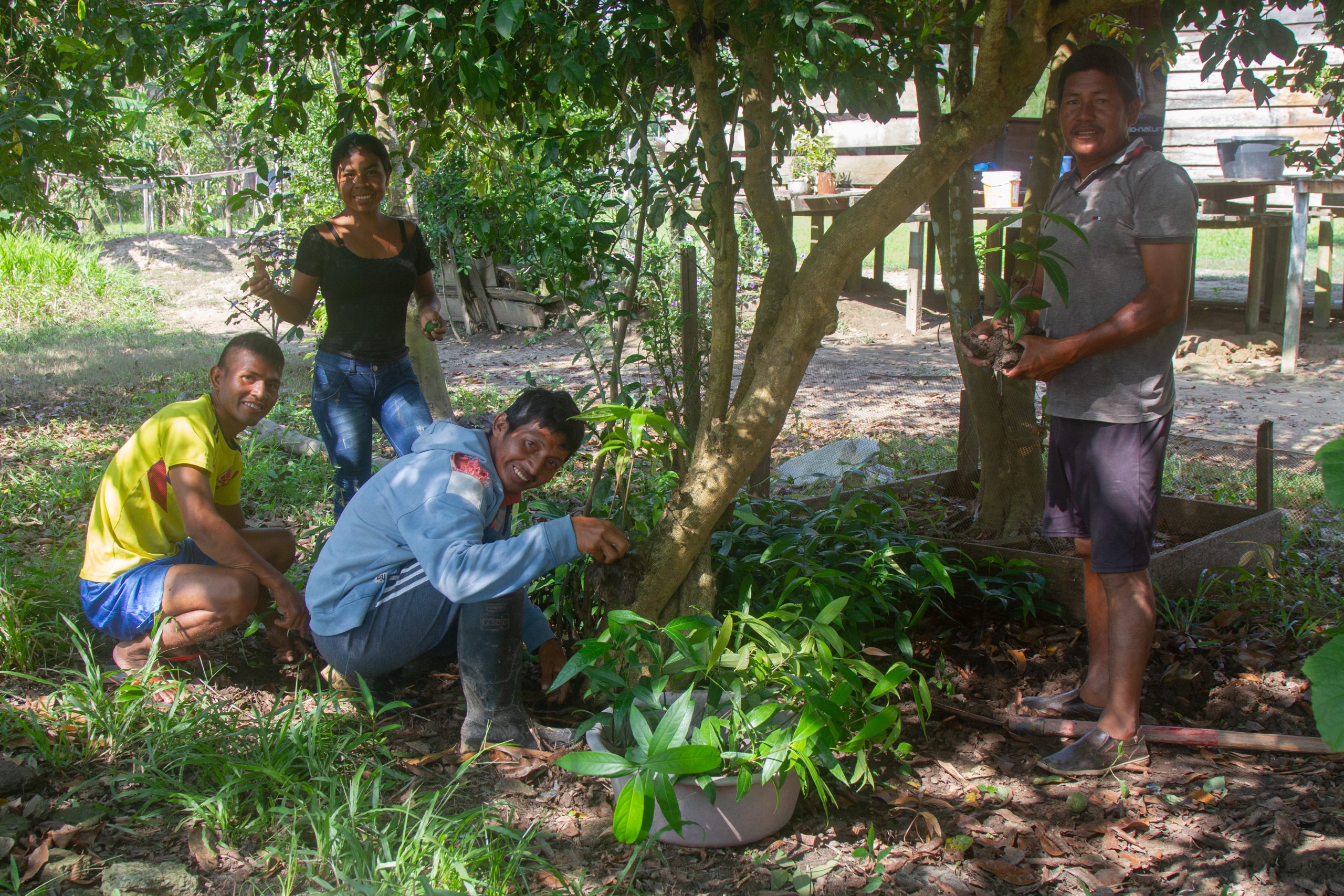
It was also important to us to share our fundraising success with other organizations, because that’s part of our vision as a platform. And so we’ve decided to transfer these 1,000 euros to you—with the hope of collaborating with you in the long term.
Tropica Verde: What are Dunkelgrün’s next goals, and how can our readers support you—for example, by volunteering or making a donation?
Felix von Keudell: We’re doing this on a relatively small scale, but what we’re really looking for is someone who’s willing to spend an extended period of time in the project area. I’ve tried this several times already. I’ve even advertised scholarships for biology students who want to conduct research there and be on the ground. Because we know that our success depends on how present we are there. But we’re finding it harder and harder to manage that ourselves, simply because our own professional careers are moving forward. That means, We are looking for people who are willing to stay in the area long-term and with us, the would like to move the project forward. These could be volunteers—though working with volunteers can sometimes involve a bit more work. But they could also be people who are already traveling in the region or doing something there anyway. Having someone on the ground to help with the project would be a great help—whether for two to four weeks or even longer.
Tropica Verde: And looking at it from a broader perspective: What are the major steps—for Dunkelgrün, but also in general—needed to effectively implement rainforest conservation in the coming years?
Felix von Keudell: Our next steps will indeed be to separate these two areas: one organization for fundraising and support, and another that carries out the work on the ground. We need to become more professional on the ground. That’s a challenge—we have to teach the local people how to manage such projects. At the same time, we really want to feature all German-speaking organizations on the website and showcase them even better. For that, we might need someone to help us manage the website and conduct research. As soon as we see our project growing, we’ll launch a new campaign and seek additional funding.
Our goal is also to, to involve the neighboring communities locally. We’ve already talked about this—namely, cross-border nature reserves. And this is in an area where deforestation is unfortunately extremely high right now. This tri-border region between Peru, Colombia, and Brazil has one of the highest rates of deforestation, yet it is one of the most biodiverse areas in the world. It’s a type of Várzea rainforest: you have to imagine that the water level rises by six to seven meters a year due to the rains. That’s immense, of course. But this is truly the heart of the rainforest—a very special area. The people there live in houses on stilts, which are, of course, extremely well adapted to the environment.
So we actually have three goals: to grow slowly as an organization and strengthen our network, to expand locally—and then, in the long term, to be able to do more for the rainforest as an organization. We’ll do this in cooperation with other NGOs and nonprofit organizations, as well as with for-profit organizations.